Live in production · AL-Rahden Co. · Saudi Arabia
The system AL-Rahden runs on
AL-Rahden services commercial laundry and kitchen equipment across Saudi Arabia — more than forty equipment brands, under multi-year maintenance contracts, for hotels, hospitals and facility operators. We built the platform that runs it: web, iOS and Android, working offline in the field, in Arabic and English.
How equipment service usually runs
Across the industry the pattern is the same. Technicians write maintenance visits on paper. Photographs reach the office over WhatsApp. Someone rebuilds each report by hand — around thirty minutes of office time per visit.
The questions that matter go unanswered because nowhere holds the answer. What was done to this machine last time? Is it still under warranty? Which sites are overdue?
The cost is rarely just time. When sales sits in one city and service in another, connected by phone calls, a company can go on servicing a customer for months after the warranty has quietly expired — and nobody finds out until someone goes looking.
AL-Rahden decided to replace that pattern with a system. This is what they run on now.
What we built
For the technician.
An app that works with no signal. Checklists, photos and the customer’s signature captured on site, synced when the phone finds a network again. Arabic throughout, right-to-left, because that is the language the work happens in.
For the office.
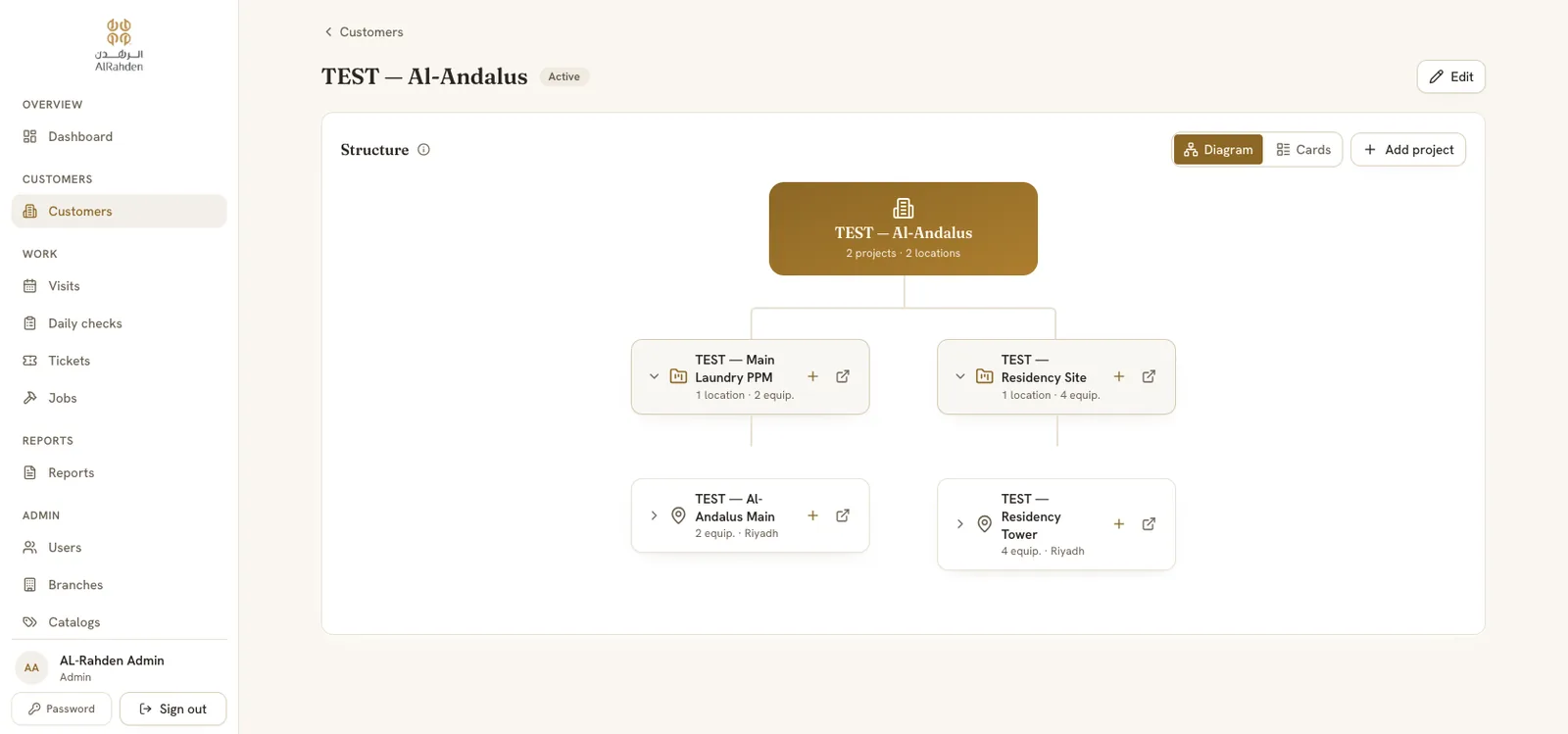
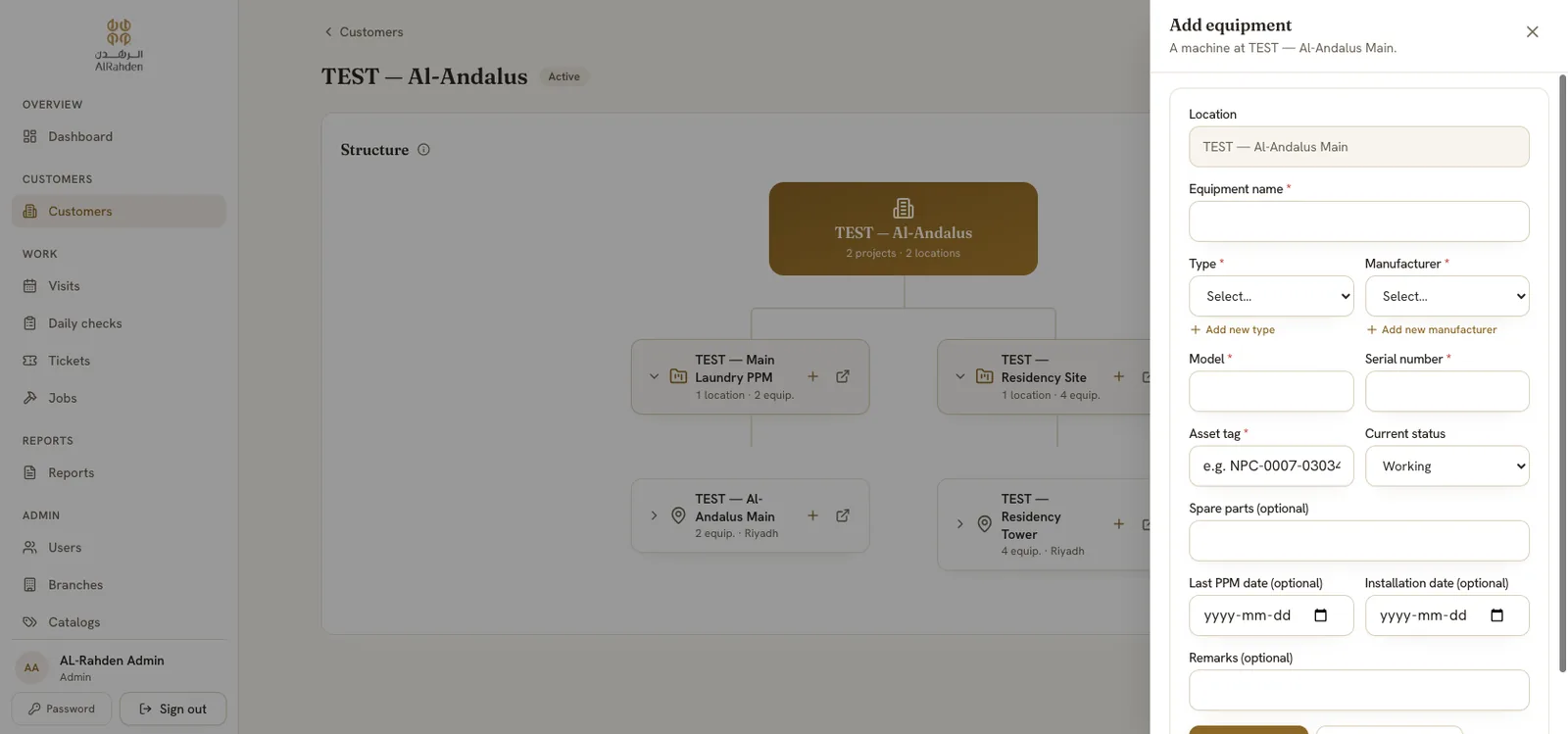
Every machine, site, customer and contract in one register. Visits scheduled, assigned and rescheduled in bulk. Branded PDF reports generated the moment a visit is completed and emailed automatically — the thirty-minute job became no job at all.
For management.
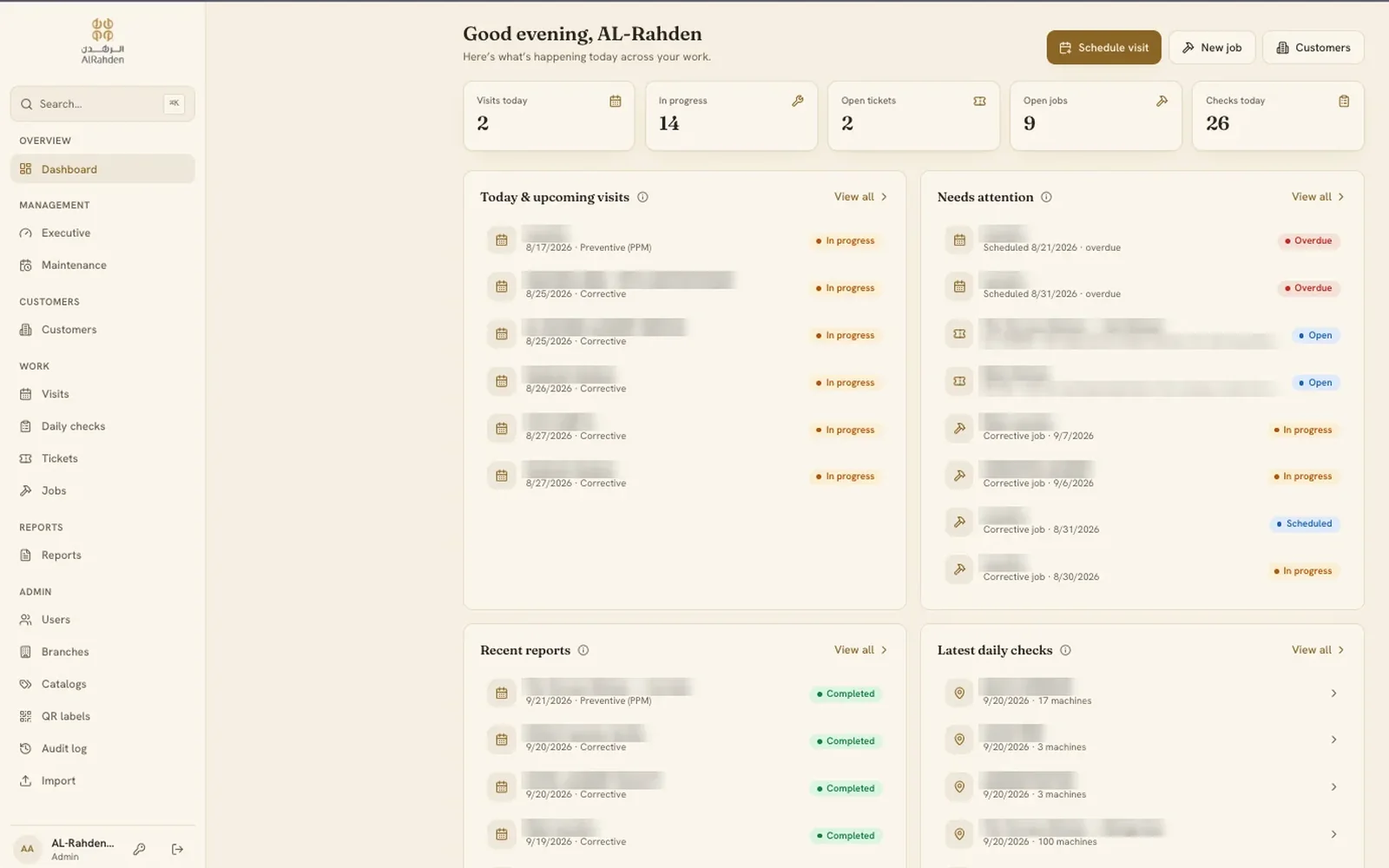
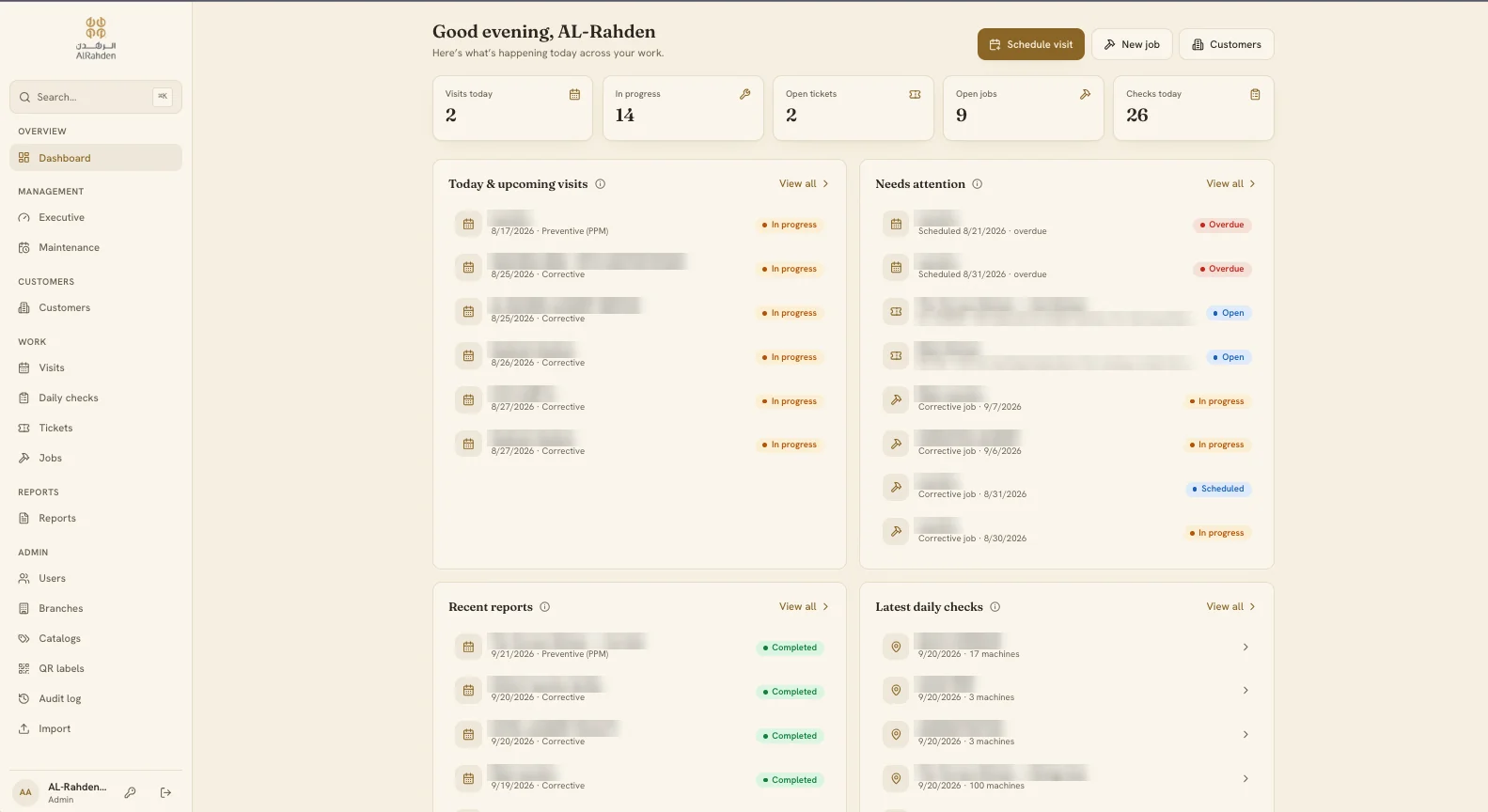
A dashboard showing preventive-maintenance compliance, open and overdue tickets, SLA performance, the health mix across the fleet, and warranty exposure. Answers, not spreadsheets.
On every machine.
A QR label carrying a signed, tamper-proof code. Scan it and the full service history opens.
How it is built
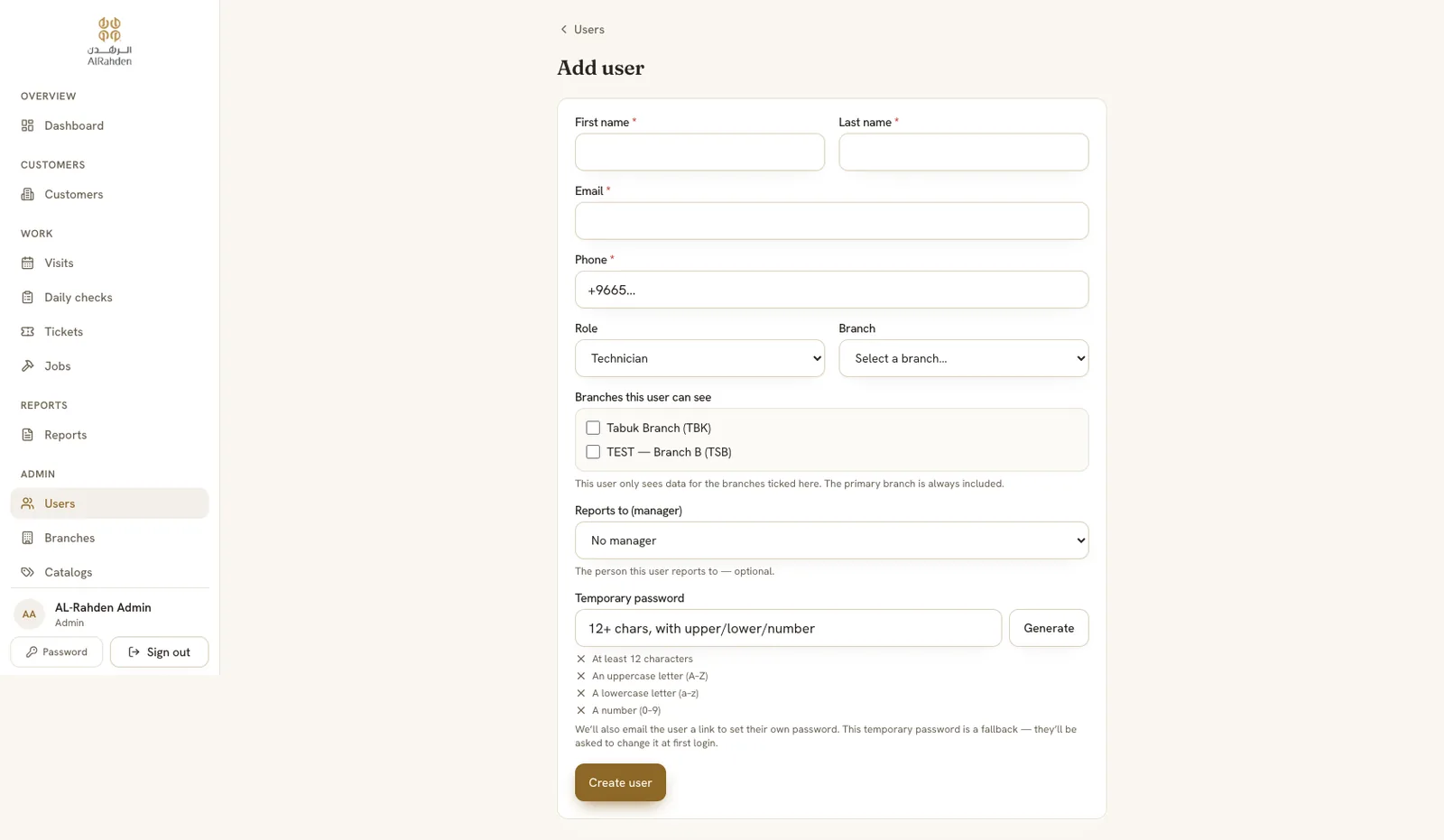
TypeScript throughout. NestJS and PostgreSQL 17 on AWS, with row-level security enforced at the database itself, so tenant data cannot leak even if application code is wrong. Next.js 15 for the web app — offline-first, with a service worker and a queued outbox that replays when the signal returns. Native iOS and Android through Expo, with push notifications and deep links. Every change written to a tamper-evident, hash-chained audit trail.
Seven roles, scoped by branch. Global search across customers, machines, serial numbers and tickets returns in about 120 milliseconds.
Delivered
Three phases in four months. Phase 1 shipped in 32 days against a 60-day commitment. 795 machines imported on day one; 1,336 today. The first branded daily report run delivered 17 of 17. The platform was later migrated to a multi-tenant architecture with 69 seconds of planned interruption.
Both apps are live and can be downloaded today:
Running your service operation on paper?
Most of this industry still is. Fifteen minutes and we will show you the working system — not slides.